HTTP 200 OK
Allow: GET, HEAD, OPTIONS
Content-Type: application/json
Vary: Accept

{
    "count": 36980,
    "next": "https://api.spaceflightnewsapi.net/v4/articles/?format=api&limit=10&offset=8550&ordering=-published_at",
    "previous": "https://api.spaceflightnewsapi.net/v4/articles/?format=api&limit=10&offset=8530&ordering=-published_at",
    "results": [
        {
            "id": 31981,
            "title": "Isar Aerospace raises 150 million euros",
            "authors": [
                {
                    "name": "Jeff Foust",
                    "socials": {
                        "x": "https://x.com/jeff_foust",
                        "youtube": "",
                        "instagram": "",
                        "linkedin": "https://www.linkedin.com/in/jefffoust",
                        "mastodon": "https://mastodon.social/@jfoust",
                        "bluesky": "https://bsky.app/profile/jfoust.bsky.social"
                    }
                }
            ],
            "url": "https://spacenews.com/isar-aerospace-raises-150-million-euros/",
            "image_url": "https://i0.wp.com/spacenews.com/wp-content/uploads/2025/03/spectrum-liftoff.jpeg?fit=1024%2C551&quality=89&ssl=1",
            "news_site": "SpaceNews",
            "summary": "\nGerman launch vehicle startup Isar Aerospace has raised 150 million euros ($174 million) in the form of a convertible bond from an American investor.\nThe post Isar Aerospace raises 150 million euros appeared first on SpaceNews.",
            "published_at": "2025-06-25T16:15:50Z",
            "updated_at": "2025-06-25T16:20:21.643075Z",
            "featured": false,
            "launches": [],
            "events": []
        },
        {
            "id": 31984,
            "title": "Live coverage: SpaceX to launch 27 Starlink satellites on Falcon 9 rocket from Cape Canaveral",
            "authors": [
                {
                    "name": "Will Robinson-Smith",
                    "socials": null
                }
            ],
            "url": "https://spaceflightnow.com/2025/06/25/live-coverage-spacex-to-launch-27-starlink-satellites-on-falcon-9-rocket-from-cape-canaveral-3/",
            "image_url": "http://spaceflightnow.com/wp-content/uploads/2024/10/20241022_Starlink_6-61_prelaunch_AB-1.jpg",
            "news_site": "Spaceflight Now",
            "summary": "The mission comes as SpaceX continues to ferry four astronauts to the International Space Station on Axiom Mission 4, which launched in the predawn hours. SpaceX is targeting liftoff from pad 40 at 3:03 p.m. EDT (1903 UTC).",
            "published_at": "2025-06-25T16:14:48Z",
            "updated_at": "2025-06-27T07:27:34.668313Z",
            "featured": false,
            "launches": [
                {
                    "launch_id": "bf1ba689-89cb-4ca5-9a10-2187cbec279b",
                    "provider": "Launch Library 2"
                }
            ],
            "events": []
        },
        {
            "id": 31982,
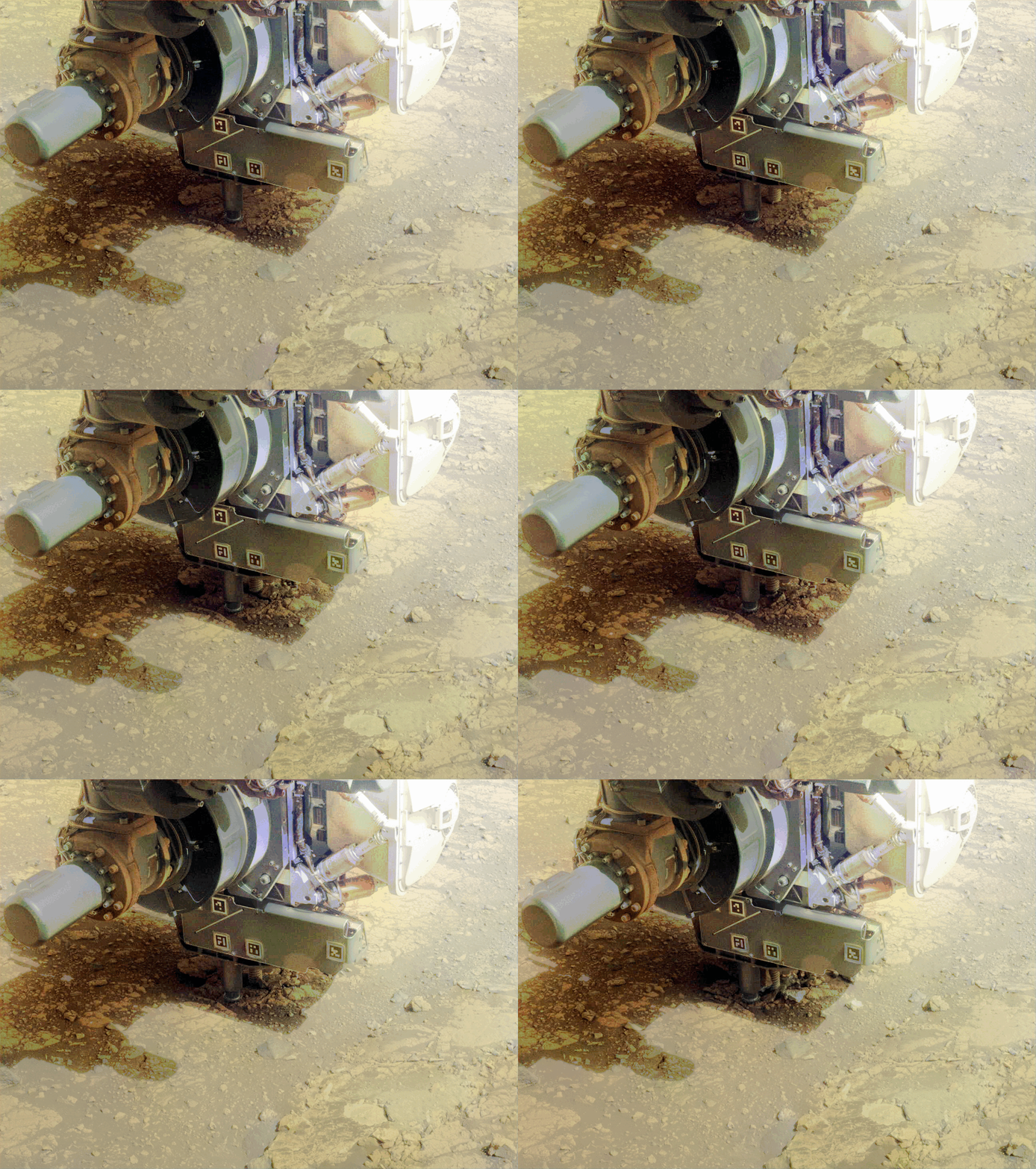
            "title": "NASA’s Perseverance Rover Scours Mars for Science",
            "authors": [
                {
                    "name": "NASA",
                    "socials": null
                }
            ],
            "url": "https://www.nasa.gov/missions/mars-2020-perseverance/perseverance-rover/nasas-perseverance-rover-scours-mars-for-science/",
            "image_url": "https://www.nasa.gov/wp-content/uploads/2025/06/1-pia26575-fcam-abrade-1531.gif",
            "news_site": "NASA",
            "summary": "In addition to drilling rock core samples, the science team has been grinding its way into rocks to make sense of the scientific evidence hiding just below the surface. On June 3, NASA’s Perseverance Mars rover ground down a portion of a rock surface, blew away the resulting debris, and then went to work studying […]",
            "published_at": "2025-06-25T16:12:16Z",
            "updated_at": "2025-06-27T07:27:15.453639Z",
            "featured": false,
            "launches": [
                {
                    "launch_id": "c4db6995-f25f-4608-8eb9-ce95d5226af2",
                    "provider": "Launch Library 2"
                }
            ],
            "events": []
        },
        {
            "id": 31971,
            "title": "Alien Ocean",
            "authors": [
                {
                    "name": "NASA",
                    "socials": null
                }
            ],
            "url": "https://science.nasa.gov/science-research/alien-ocean-2/",
            "image_url": "https://science.nasa.gov/wp-content/uploads/2017/12/europa-clipper-liftoff-hi-res-1920x640-1.jpg",
            "news_site": "NASA",
            "summary": "Could a liquid water ocean beneath the surface of Jupiter’s moon Europa have the ingredients to support life? Here’s how NASA’s mission to Europa would find out.",
            "published_at": "2025-06-25T15:47:04Z",
            "updated_at": "2025-06-25T16:10:14.059770Z",
            "featured": false,
            "launches": [],
            "events": []
        },
        {
            "id": 31972,
            "title": "Buoyant Rover for Under Ice Exploration",
            "authors": [
                {
                    "name": "NASA",
                    "socials": null
                }
            ],
            "url": "https://science.nasa.gov/missions/europa-clipper/europa-clipper-resources/buoyant-rover-for-under-ice-exploration/",
            "image_url": "https://science.nasa.gov/wp-content/uploads/2017/12/europa-clipper-liftoff-hi-res-1920x640-1.jpg",
            "news_site": "NASA",
            "summary": "Researchers at NASA’s Jet Propulsion Laboratory are developing the Buoyant Rover for Under-Ice Exploration, a technology that could one day explore oceans under the ice layers of planetary bodies. The prototype was tested in arctic lakes near Barrow, Alaska.",
            "published_at": "2025-06-25T15:47:04Z",
            "updated_at": "2025-06-25T16:10:14.067148Z",
            "featured": false,
            "launches": [],
            "events": []
        },
        {
            "id": 31973,
            "title": "Europa: Ocean World",
            "authors": [
                {
                    "name": "NASA",
                    "socials": null
                }
            ],
            "url": "https://science.nasa.gov/missions/europa-clipper/europa-clipper-resources/europa-ocean-world/",
            "image_url": "https://science.nasa.gov/wp-content/uploads/2017/12/europa-clipper-liftoff-hi-res-1920x640-1.jpg",
            "news_site": "NASA",
            "summary": "Scientists think there is an ocean within Jupiter’s moon Europa. NASA-JPL astrobiologist Kevin Hand explains why scientists are so excited about the potential of this ice-covered world to answer one of humanity’s most profound questions.",
            "published_at": "2025-06-25T15:47:03Z",
            "updated_at": "2025-06-25T16:10:14.072321Z",
            "featured": false,
            "launches": [],
            "events": []
        },
        {
            "id": 31974,
            "title": "Alien Ocean",
            "authors": [
                {
                    "name": "NASA",
                    "socials": null
                }
            ],
            "url": "https://science.nasa.gov/science-research/alien-ocean/",
            "image_url": "https://science.nasa.gov/wp-content/uploads/2017/12/europa-clipper-liftoff-hi-res-1920x640-1.jpg",
            "news_site": "NASA",
            "summary": "Explore This Section Science Europa Clipper Alien Ocean Europa Clipper Home Mission Overview Facts History Timeline Science Goals Team Spacecraft Meet Europa Clipper Instruments Assembly Vault Plate Message in a Bottle News News & Features Blog Newsroom Replay the Launch Multimedia Featured Multimedia Resources About Europa Why Europa? Europa Up Close Ingredients for Life Evidence […]",
            "published_at": "2025-06-25T15:47:02Z",
            "updated_at": "2025-06-25T16:10:14.076430Z",
            "featured": false,
            "launches": [],
            "events": []
        },
        {
            "id": 31975,
            "title": "Reddish Bands on Europa",
            "authors": [
                {
                    "name": "NASA",
                    "socials": null
                }
            ],
            "url": "https://science.nasa.gov/science-research/reddish-bands-on-europa/",
            "image_url": "https://assets.science.nasa.gov/dynamicimage/assets/science/missions/europa-clipper/images/PIA18413_internet.jpg",
            "news_site": "NASA",
            "summary": "This colorized image of Europa is a product of clear-filter grayscale data from one orbit of NASA’s Galileo spacecraft, combined with lower-resolution color data taken on a different orbit. The blue-white terrains indicate relatively pure water ice, whereas the reddish areas contain water ice mixed with hydrated salts, potentially magnesium sulfate or sulfuric acid. The […]",
            "published_at": "2025-06-25T15:47:01Z",
            "updated_at": "2025-06-27T07:26:47.439816Z",
            "featured": false,
            "launches": [
                {
                    "launch_id": "37632616-07e2-4755-8f2e-42ca58c9d9c0",
                    "provider": "Launch Library 2"
                }
            ],
            "events": []
        },
        {
            "id": 31976,
            "title": "Europa’s Stunning Surface",
            "authors": [
                {
                    "name": "NASA",
                    "socials": null
                }
            ],
            "url": "https://science.nasa.gov/missions/europa-clipper/europa-clipper-resources/europas-stunning-surface/",
            "image_url": "https://assets.science.nasa.gov/dynamicimage/assets/science/missions/europa-clipper/images/pia19048.jpg",
            "news_site": "NASA",
            "summary": "The puzzling, fascinating surface of Jupiter’s icy moon Europa looms large in this newly-reprocessed color view, made from images taken by NASA’s Galileo spacecraft in the late 1990s. This is the color view of Europa from Galileo that shows the largest portion of the moon’s surface at the highest resolution. The view was previously released […]",
            "published_at": "2025-06-25T15:47:01Z",
            "updated_at": "2025-06-27T07:26:54.955021Z",
            "featured": false,
            "launches": [
                {
                    "launch_id": "37632616-07e2-4755-8f2e-42ca58c9d9c0",
                    "provider": "Launch Library 2"
                }
            ],
            "events": []
        },
        {
            "id": 31977,
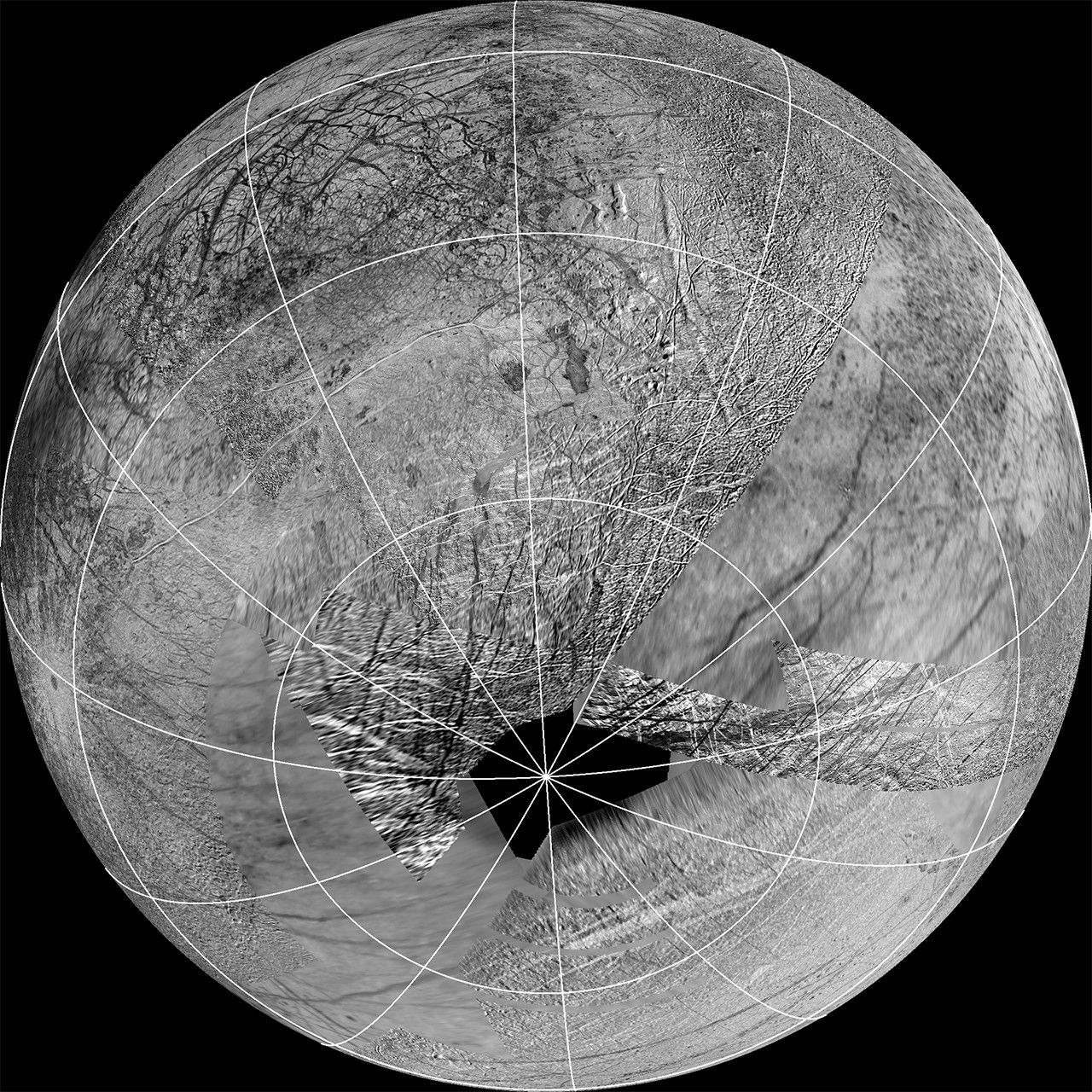
            "title": "Source Region for Possible Europa Plumes",
            "authors": [
                {
                    "name": "NASA",
                    "socials": null
                }
            ],
            "url": "https://science.nasa.gov/science-research/source-region-for-possible-europa-plumes/",
            "image_url": "https://assets.science.nasa.gov/dynamicimage/assets/science/missions/europa-clipper/images/plumesourcemap_1280.jpg",
            "news_site": "NASA",
            "summary": "This reprojection of the official USGS Europa basemap is centered at the estimated source region for potential plumes that might have been detected using the Hubble Space Telescope. The view is centered at -65 degrees latitude, 183 degrees longitude. In addition to the plume source region, the image also shows the hemisphere of Europa that […]",
            "published_at": "2025-06-25T15:47:00Z",
            "updated_at": "2025-06-27T07:26:39.654429Z",
            "featured": false,
            "launches": [
                {
                    "launch_id": "37632616-07e2-4755-8f2e-42ca58c9d9c0",
                    "provider": "Launch Library 2"
                }
            ],
            "events": []
        }
    ]
}