HTTP 200 OK
Allow: GET, HEAD, OPTIONS
Content-Type: application/json
Vary: Accept

{
    "count": 36980,
    "next": "https://api.spaceflightnewsapi.net/v4/articles/?format=api&limit=10&offset=8520&ordering=-published_at",
    "previous": "https://api.spaceflightnewsapi.net/v4/articles/?format=api&limit=10&offset=8500&ordering=-published_at",
    "results": [
        {
            "id": 32011,
            "title": "Technology safeguards agreement enables Firefly launches from Sweden",
            "authors": [
                {
                    "name": "Jeff Foust",
                    "socials": {
                        "x": "https://x.com/jeff_foust",
                        "youtube": "",
                        "instagram": "",
                        "linkedin": "https://www.linkedin.com/in/jefffoust",
                        "mastodon": "https://mastodon.social/@jfoust",
                        "bluesky": "https://bsky.app/profile/jfoust.bsky.social"
                    }
                }
            ],
            "url": "https://spacenews.com/technology-safeguards-agreement-enables-firefly-launches-from-sweden/",
            "image_url": "https://i0.wp.com/spacenews.com/wp-content/uploads/2024/06/Firefly-Alpha-Rocket-Esrange-Rendering.jpg?fit=1024%2C573&quality=89&ssl=1",
            "news_site": "SpaceNews",
            "summary": "\nAn agreement between the United States and Sweden brings Firefly Aerospace one step closer to launching its Alpha rocket from a Swedish spaceport.\nThe post Technology safeguards agreement enables Firefly launches from Sweden appeared first on SpaceNews.",
            "published_at": "2025-06-26T16:38:09Z",
            "updated_at": "2025-06-26T16:40:13.263468Z",
            "featured": false,
            "launches": [],
            "events": []
        },
        {
            "id": 32009,
            "title": "By Air and by Sea: Validating NASA’s PACE Ocean Color Instrument",
            "authors": [
                {
                    "name": "NASA",
                    "socials": null
                }
            ],
            "url": "https://www.nasa.gov/centers-and-facilities/ames/ames-science/by-air-and-by-sea-validating-nasas-pace-ocean-color-instrument/",
            "image_url": "https://www.nasa.gov/wp-content/uploads/2025/06/20241020-120744.jpg",
            "news_site": "NASA",
            "summary": "In autumn 2024, California’s Monterey Bay experienced an outsized phytoplankton bloom that attracted fish, dolphins, whales, seabirds, and – for a few weeks in October – scientists. A team from NASA’s Ames Research Center in Silicon Valley, with partners at the University of California, Santa Cruz (UCSC), and the Naval Postgraduate School, spent two weeks […]",
            "published_at": "2025-06-26T16:23:43Z",
            "updated_at": "2025-06-27T15:33:13.955399Z",
            "featured": false,
            "launches": [
                {
                    "launch_id": "549f26ed-a5f7-49fb-97a7-fb2ffa26e3e8",
                    "provider": "Launch Library 2"
                }
            ],
            "events": []
        },
        {
            "id": 32010,
            "title": "NASA Mars Orbiter Learns New Moves After Nearly 20 Years in Space",
            "authors": [
                {
                    "name": "NASA",
                    "socials": null
                }
            ],
            "url": "https://www.nasa.gov/missions/mars-reconnaissance-orbiter/nasa-mars-orbiter-learns-new-moves-after-nearly-20-years-in-space/",
            "image_url": "https://www.nasa.gov/wp-content/uploads/2025/06/1-pia04918-mro-artists-concept.jpg",
            "news_site": "NASA",
            "summary": "The Mars Reconnaissance Orbiter is testing a series of large spacecraft rolls that will help it hunt for water. After nearly 20 years of operations, NASA’s Mars Reconnaissance Orbiter (MRO) is on a roll, performing a new maneuver to squeeze even more science out of the busy spacecraft as it circles the Red Planet. Engineers […]",
            "published_at": "2025-06-26T16:12:28Z",
            "updated_at": "2025-06-27T07:30:26.922044Z",
            "featured": false,
            "launches": [
                {
                    "launch_id": "d23062f3-86d7-4b99-80f1-4c31cb07fcc0",
                    "provider": "Launch Library 2"
                }
            ],
            "events": []
        },
        {
            "id": 32007,
            "title": "NASA Citizen Scientists Find New Eclipsing Binary Stars",
            "authors": [
                {
                    "name": "NASA",
                    "socials": null
                }
            ],
            "url": "https://science.nasa.gov/get-involved/citizen-science/nasa-citizen-scientists-find-new-eclipsing-binary-stars/",
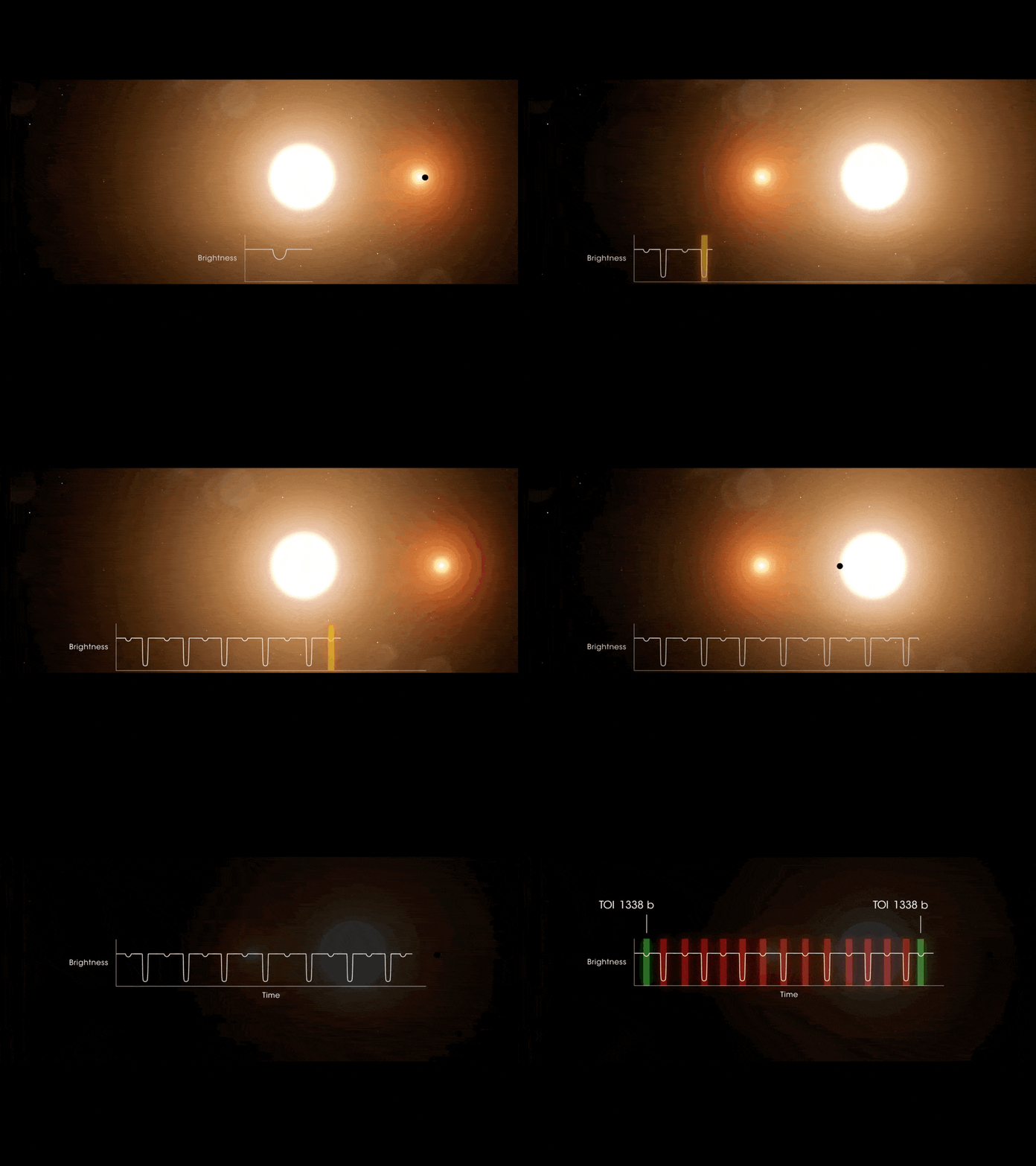
            "image_url": "https://assets.science.nasa.gov/content/dam/science/cds/citizen-science/highlights/2025/toi_1338-optimized.gif",
            "news_site": "NASA",
            "summary": "When two stars orbit one another in such a way that one blocks the other’s light each time it swings around, that’s an eclipsing binary. A new paper from NASA’s Eclipsing Binary Patrol citizen science project presents more than 10,000 of these rare pairs – 10,001 to be precise. These objects will help future researchers study […]",
            "published_at": "2025-06-26T15:58:43Z",
            "updated_at": "2025-06-26T16:10:08.554416Z",
            "featured": false,
            "launches": [],
            "events": []
        },
        {
            "id": 32008,
            "title": "Meet the Space Ops Team: Derrick Bailey",
            "authors": [
                {
                    "name": "NASA",
                    "socials": null
                }
            ],
            "url": "https://www.nasa.gov/directorates/somd/meet-the-space-ops-team-derrick-bailey/",
            "image_url": "https://www.nasa.gov/wp-content/uploads/2025/06/derrick-bailey-graphic.png",
            "news_site": "NASA",
            "summary": "Since childhood, Derrick Bailey always had an early fascination with aeronautics. Military fighter jet pilots were his childhood heroes, and he dreamed of joining the aerospace industry. This passion was a springboard into his 17-year career at NASA, where Bailey plays an important role in enabling successful rocket launches. Bailey is the Launch Vehicle Certification […]",
            "published_at": "2025-06-26T15:48:09Z",
            "updated_at": "2025-06-26T16:10:08.587930Z",
            "featured": false,
            "launches": [],
            "events": []
        },
        {
            "id": 32012,
            "title": "Ax-4 joins the International Space Station",
            "authors": [
                {
                    "name": "ESA",
                    "socials": null
                }
            ],
            "url": "https://www.esa.int/ESA_Multimedia/Videos/2025/06/Ax-4_joins_the_International_Space_Station",
            "image_url": "https://www.esa.int/var/esa/storage/images/esa_multimedia/videos/2025/06/ax-4_joins_the_international_space_station/26774114-1-eng-GB/Ax-4_joins_the_International_Space_Station_card_full.png",
            "news_site": "ESA",
            "summary": "On 26 June 2025 ESA project astronaut Sławosz Uznański-Wiśniewski from Poland and his crewmates arrived to the International Space Station on the Axiom-4 mission (Ax-4).\r\nThe Polish project astronaut is the second of a new generation of European astronauts to fly on a commercial human spaceflight opportunity with Axiom Space.Sponsored by the Polish government and supported by ESA, the Polish Ministry of Economic Development and Technology (MRiT), and the Polish Space Agency (POLSA), the mission will include an ambitious technological and scientific programme with several experiments led by ESA and proposed by the Polish space industry.",
            "published_at": "2025-06-26T15:39:00Z",
            "updated_at": "2025-06-27T07:30:10.466420Z",
            "featured": false,
            "launches": [
                {
                    "launch_id": "0805af04-c2ea-4750-9eb4-f24f89eeb5d6",
                    "provider": "Launch Library 2"
                }
            ],
            "events": []
        },
        {
            "id": 32006,
            "title": "Axiom-4 Continues to Expand Access to Station",
            "authors": [
                {
                    "name": "Nik Alexander",
                    "socials": null
                }
            ],
            "url": "https://www.spacescout.info/2025/06/axiom-4-continues-to-expand-access-to-station/",
            "image_url": "https://i0.wp.com/www.spacescout.info/wp-content/uploads/2025/06/nwaxiomonpad-scaled.jpg",
            "news_site": "Space Scout",
            "summary": "The crew of Axiom-4 launched aboard a SpaceX Crew Dragon spacecraft atop a Falcon 9 rocket from Kennedy Space Center’s LC‑39A at 2:31 AM local time, setting the stage for an international mission to the world's premier orbital laboratory.",
            "published_at": "2025-06-26T14:04:09Z",
            "updated_at": "2025-06-27T07:30:06.172308Z",
            "featured": false,
            "launches": [
                {
                    "launch_id": "0805af04-c2ea-4750-9eb4-f24f89eeb5d6",
                    "provider": "Launch Library 2"
                }
            ],
            "events": []
        },
        {
            "id": 32013,
            "title": "NASA’s Webb Digs into Structural Origins of Disk Galaxies",
            "authors": [
                {
                    "name": "NASA",
                    "socials": null
                }
            ],
            "url": "https://science.nasa.gov/missions/webb/nasas-webb-digs-into-structural-origins-of-disk-galaxies/",
            "image_url": "https://assets.science.nasa.gov/dynamicimage/assets/science/missions/webb/science/2025/webb-STScI-01JXX1TQRCDE8F92WV13SF4NE7-1K.jpg",
            "news_site": "NASA",
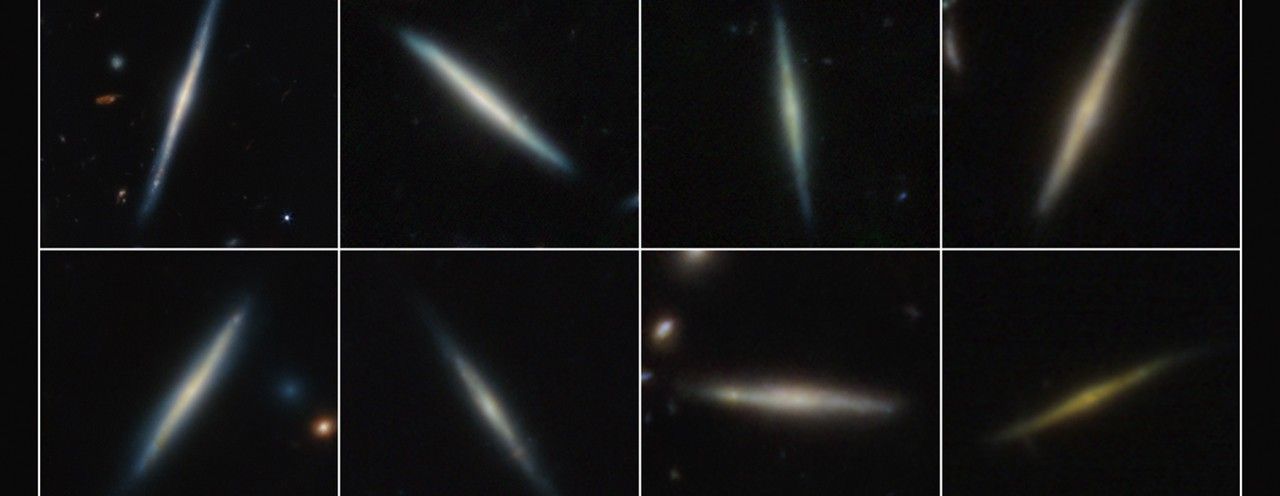
            "summary": "Present-day disk galaxies often contain a thick, star-filled outer disk and an embedded thin disk of stars. For instance, our own Milky Way galaxy’s thick disk is approximately 3,000 light-years in height, and its thin disk is roughly 1,000 light-years thick. How and why does this dual disk structure form? By analyzing archival data from […]",
            "published_at": "2025-06-26T14:00:00Z",
            "updated_at": "2025-06-27T07:29:58.360082Z",
            "featured": false,
            "launches": [
                {
                    "launch_id": "d0fa4bb2-80ea-4808-af08-7785dde53bf6",
                    "provider": "Launch Library 2"
                }
            ],
            "events": []
        },
        {
            "id": 32005,
            "title": "What Mars can teach us about life",
            "authors": [
                {
                    "name": "SpaceNews Editor",
                    "socials": null
                }
            ],
            "url": "https://spacenews.com/what-mars-can-teach-us-about-life/",
            "image_url": "https://i0.wp.com/spacenews.com/wp-content/uploads/2025/06/2000x1500-Nathalie-Cabrol.png?fit=1024%2C768&quality=80&ssl=1",
            "news_site": "SpaceNews",
            "summary": "\nIn this week’s episode of Space Minds David Ariosto sits down Nathalie Cabrol, Director of the Carl Sagan Center at the SETI Institute who explains why the Red Planet may hold answers about extraterrestrial life as well as our own origins.\nThe post What Mars can teach us about life appeared first on SpaceNews.",
            "published_at": "2025-06-26T13:51:36Z",
            "updated_at": "2025-06-26T14:00:23.225797Z",
            "featured": false,
            "launches": [],
            "events": []
        },
        {
            "id": 32004,
            "title": "Northrop Grumman set to test SLS Block 2 BOLE booster in Utah",
            "authors": [
                {
                    "name": "Justin Davenport",
                    "socials": null
                }
            ],
            "url": "https://www.nasaspaceflight.com/2025/06/bole-dm1-test/",
            "image_url": "https://www.nasaspaceflight.com/wp-content/uploads/2025/06/cachedImage.jpg",
            "news_site": "NASASpaceflight",
            "summary": "Northrop Grumman is set to conduct the first test firing of its Booster Obsolescence and…\r\nThe post Northrop Grumman set to test SLS Block 2 BOLE booster in Utah appeared first on NASASpaceFlight.com.",
            "published_at": "2025-06-26T13:40:14Z",
            "updated_at": "2025-06-27T07:29:53.054519Z",
            "featured": false,
            "launches": [],
            "events": [
                {
                    "event_id": 1207,
                    "provider": "Launch Library 2"
                }
            ]
        }
    ]
}